Fallingwater: Frank Lloyd Wright's House Over a Waterfall
Deep in Pennsylvania's Laurel Highlands, a house hangs over a waterfall. We spent a day at Fallingwater, Frank Lloyd Wright's most famous home, and found it even better in person.
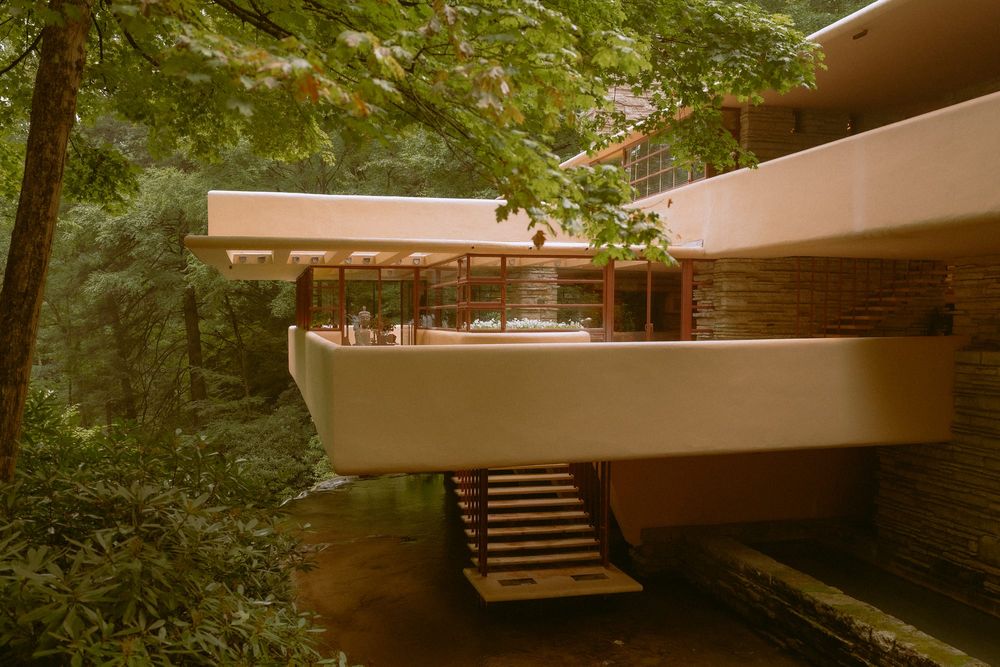
You hear Fallingwater before you see it. The path winds through rhododendron and hemlock, the sound of Bear Run gets louder, and then the house appears through the trees. Its pale terraces stretch out over the stream as if the rock beneath them had grown into a building.
Frank Lloyd Wright designed it in 1935, near the age of 70, when many people thought his best work was behind him. It became the most celebrated house in America.
A house on the falls, not facing them
The story starts with a Pittsburgh family. Edgar J. Kaufmann Sr., who owned the city's biggest department store, had run a summer retreat for his employees at Bear Run since the 1910s. When the staff stopped using it, the Kaufmanns bought the land in 1933. Their son Edgar Jr. had just joined Wright's Taliesin Fellowship, and that link brought the architect to the site in late 1934.
The family loved the waterfall and expected a house with a view of it. Wright had other ideas. He put the house on top of the falls, so the family would live with the water instead of looking at it. According to the popular story, he didn't draw a single line for months, then sketched the whole design in a few hours on the morning Kaufmann called to say he was on his way.
Construction ran from 1936 to 1938, and a guest house followed in 1939.
Built from the hillside
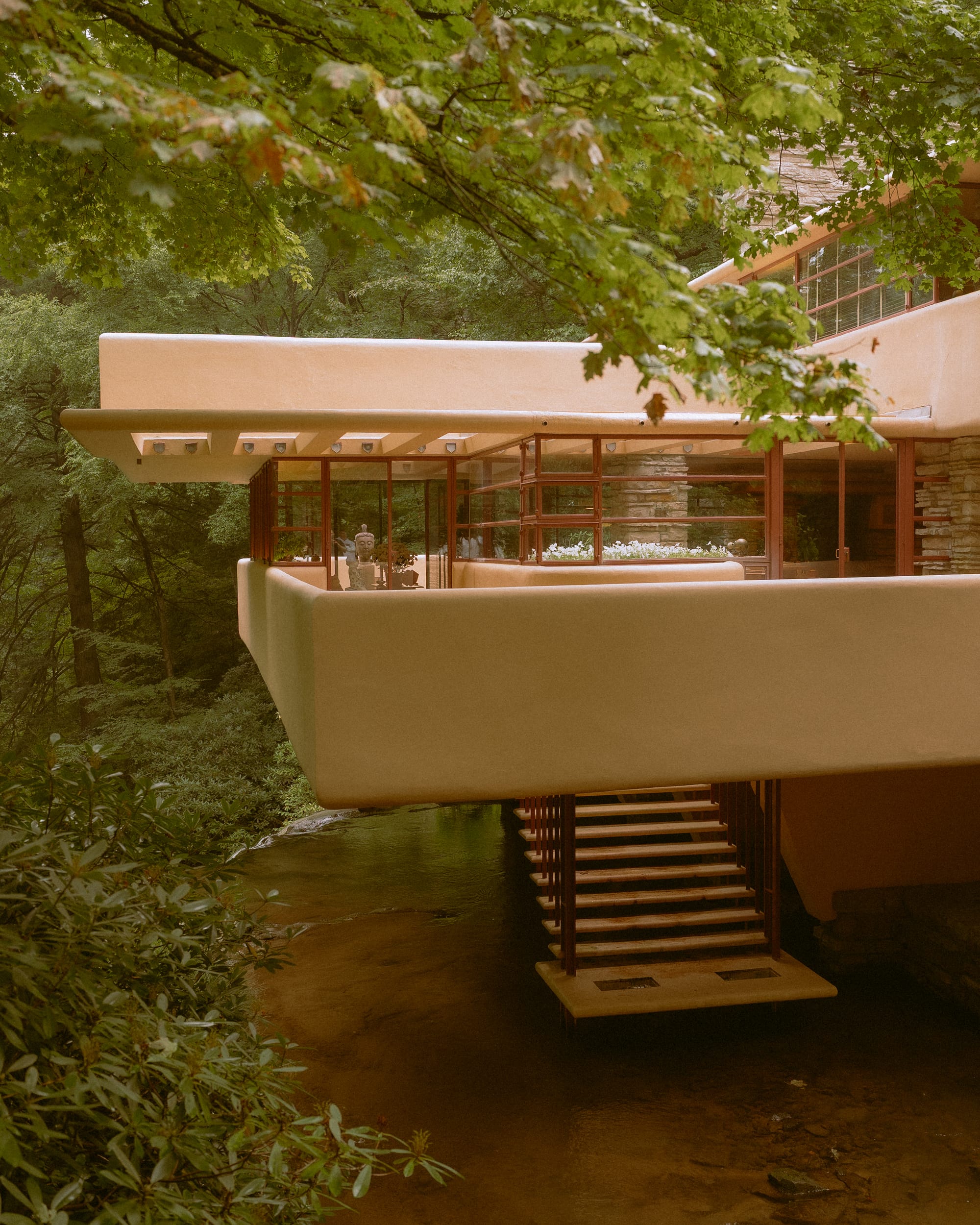
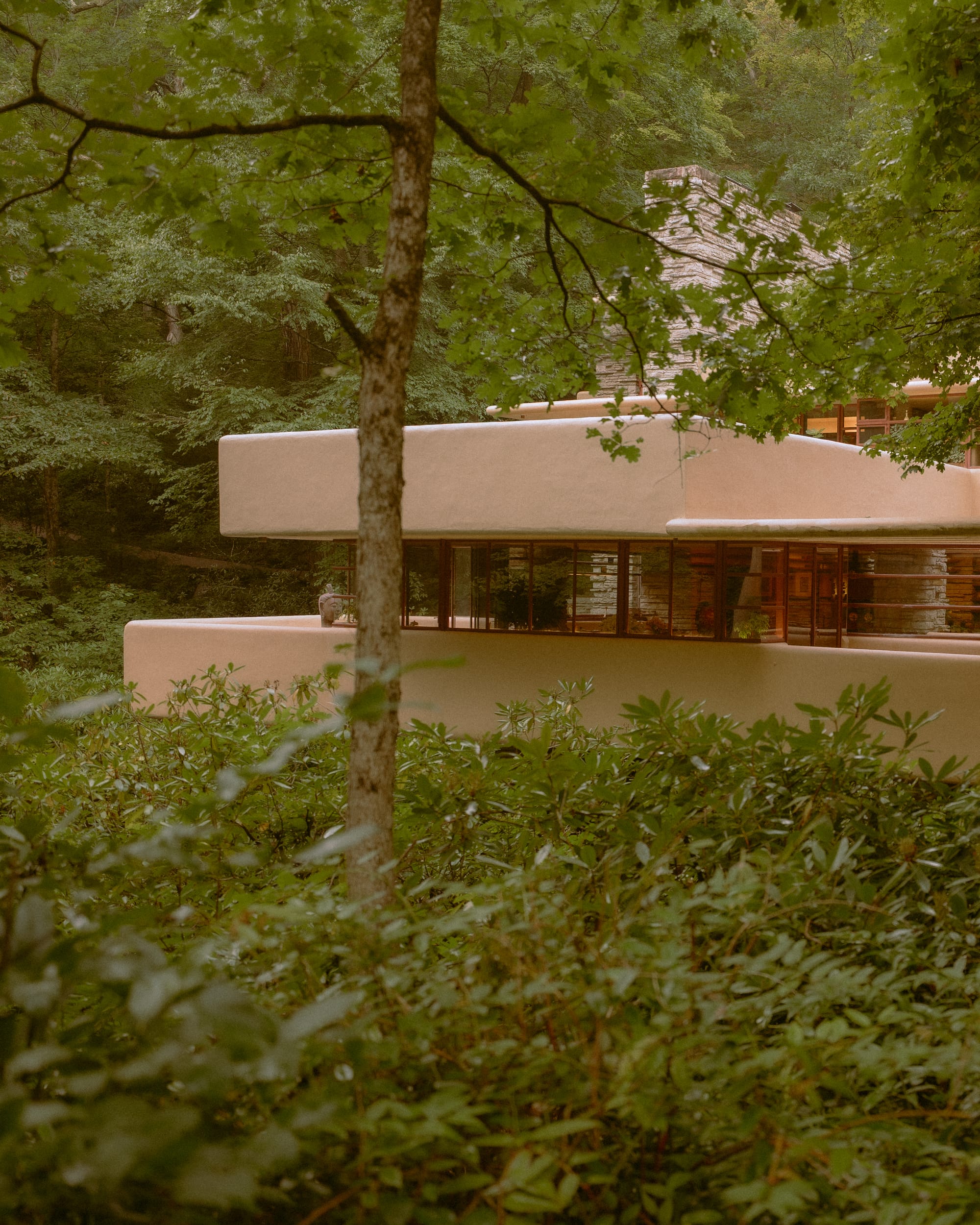
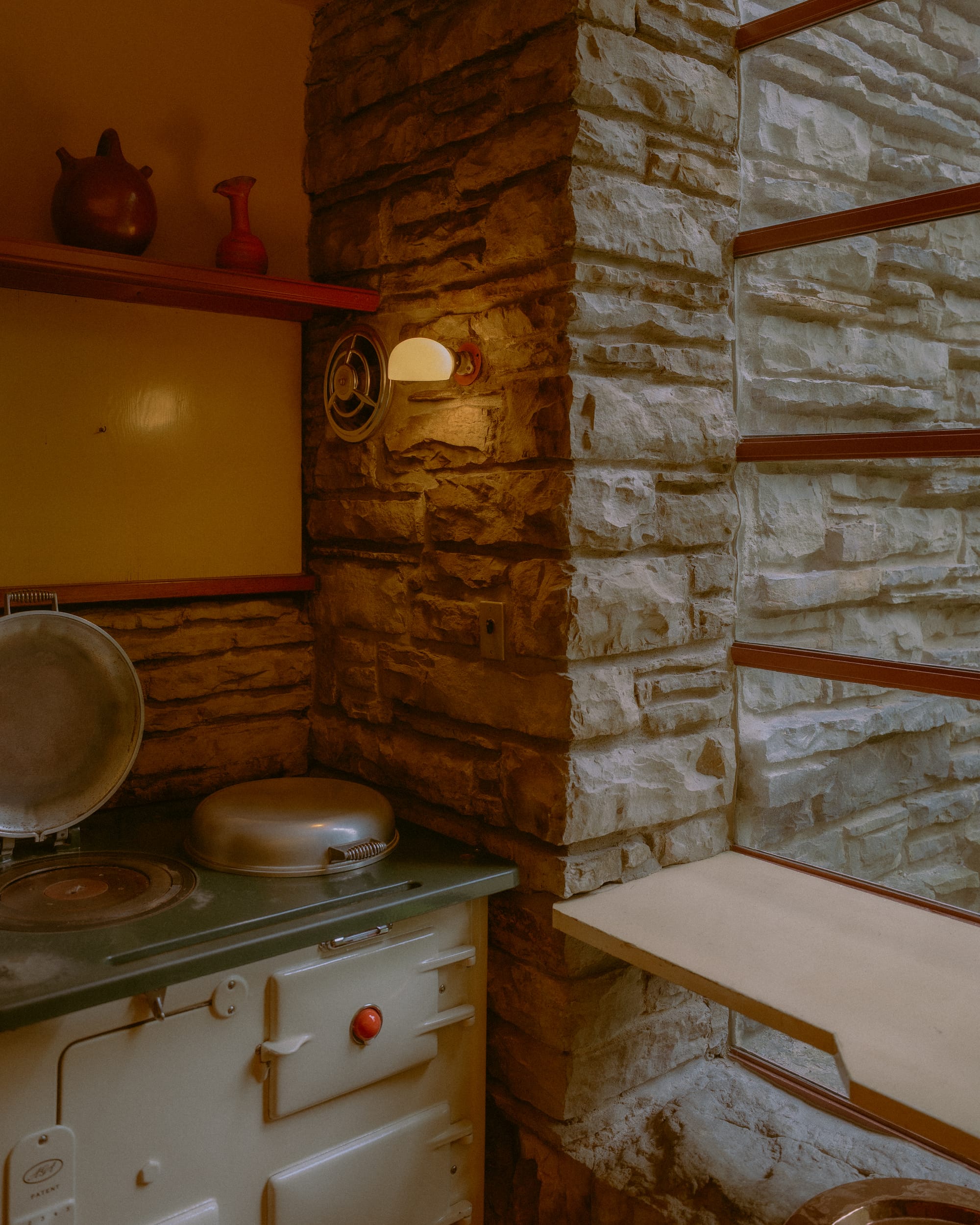
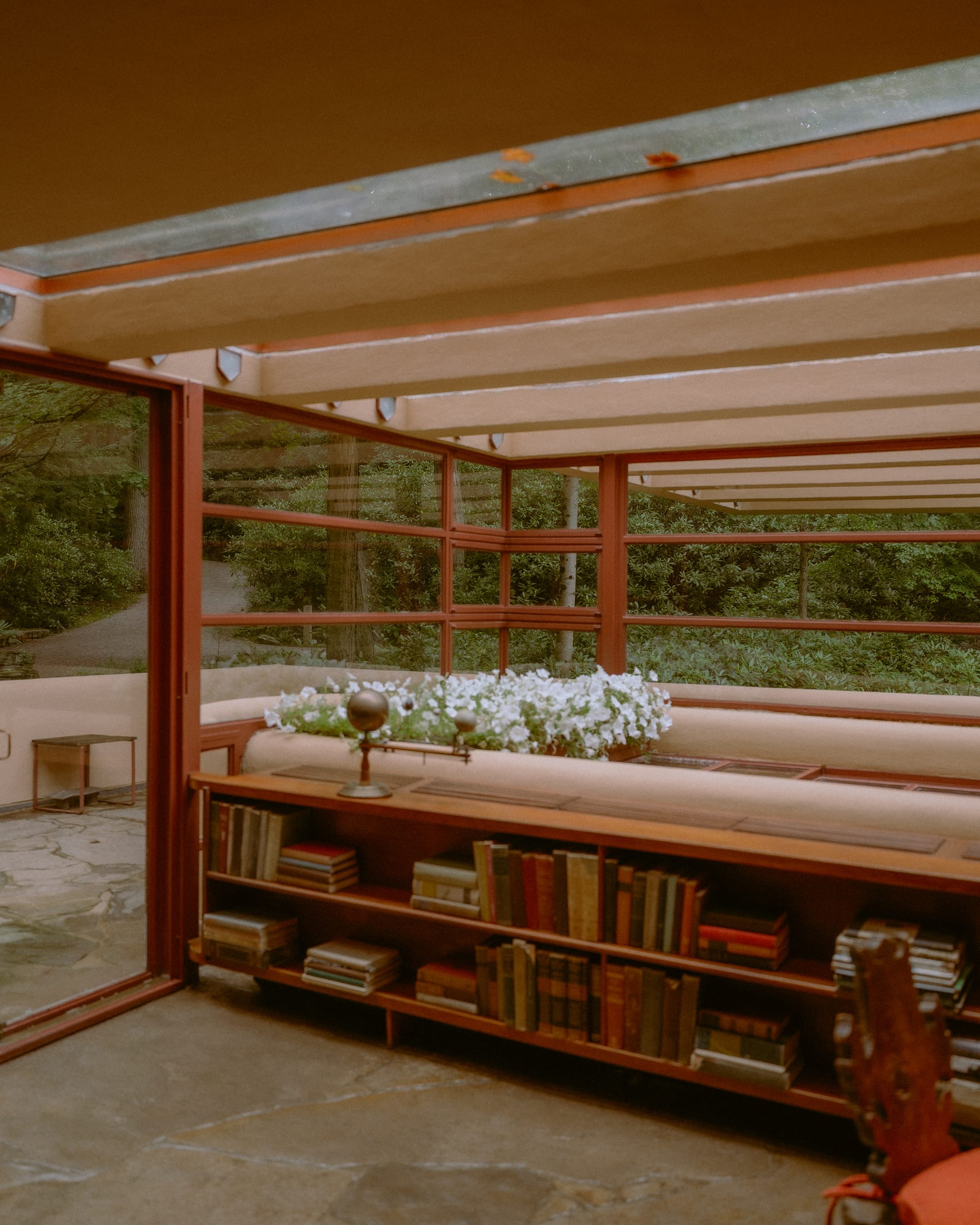
Up close, the house is made of two materials: concrete and stone. The terraces are concrete, painted a soft ochre that Wright chose to match the underside of a rhododendron leaf. The walls are sandstone quarried on the property, laid in rough horizontal bands that echo the ledges of the falls below. The window frames are painted in Wright's favorite Cherokee red.
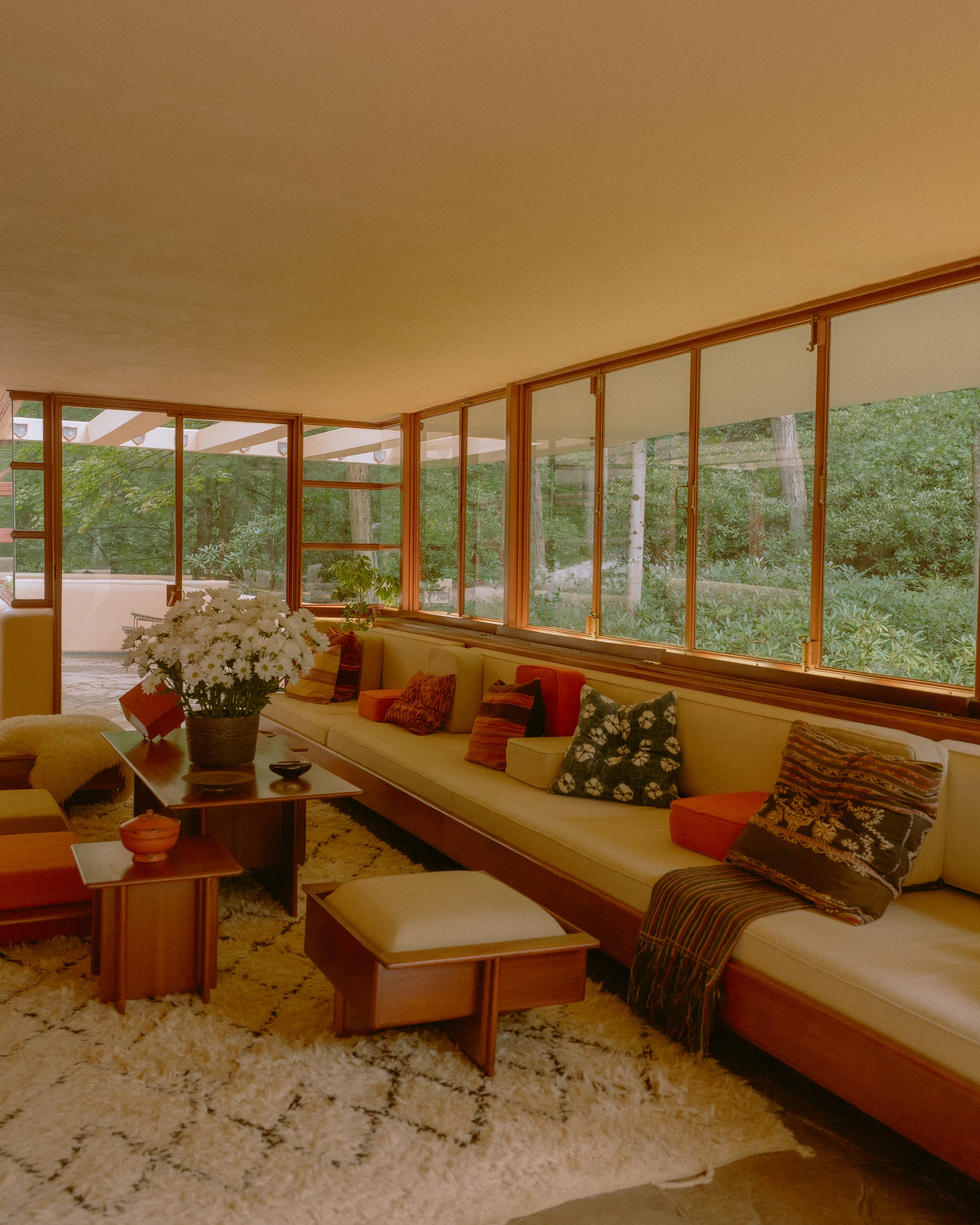
Inside, the boundary between house and forest almost disappears. Walls of glass wrap around the corners with no posts. The stone floors are waxed but left uneven on purpose, so they look like a wet streambed. The fireplace hearth is the boulder the Kaufmanns used to sunbathe on before the house existed. Wright simply built the living room around it.
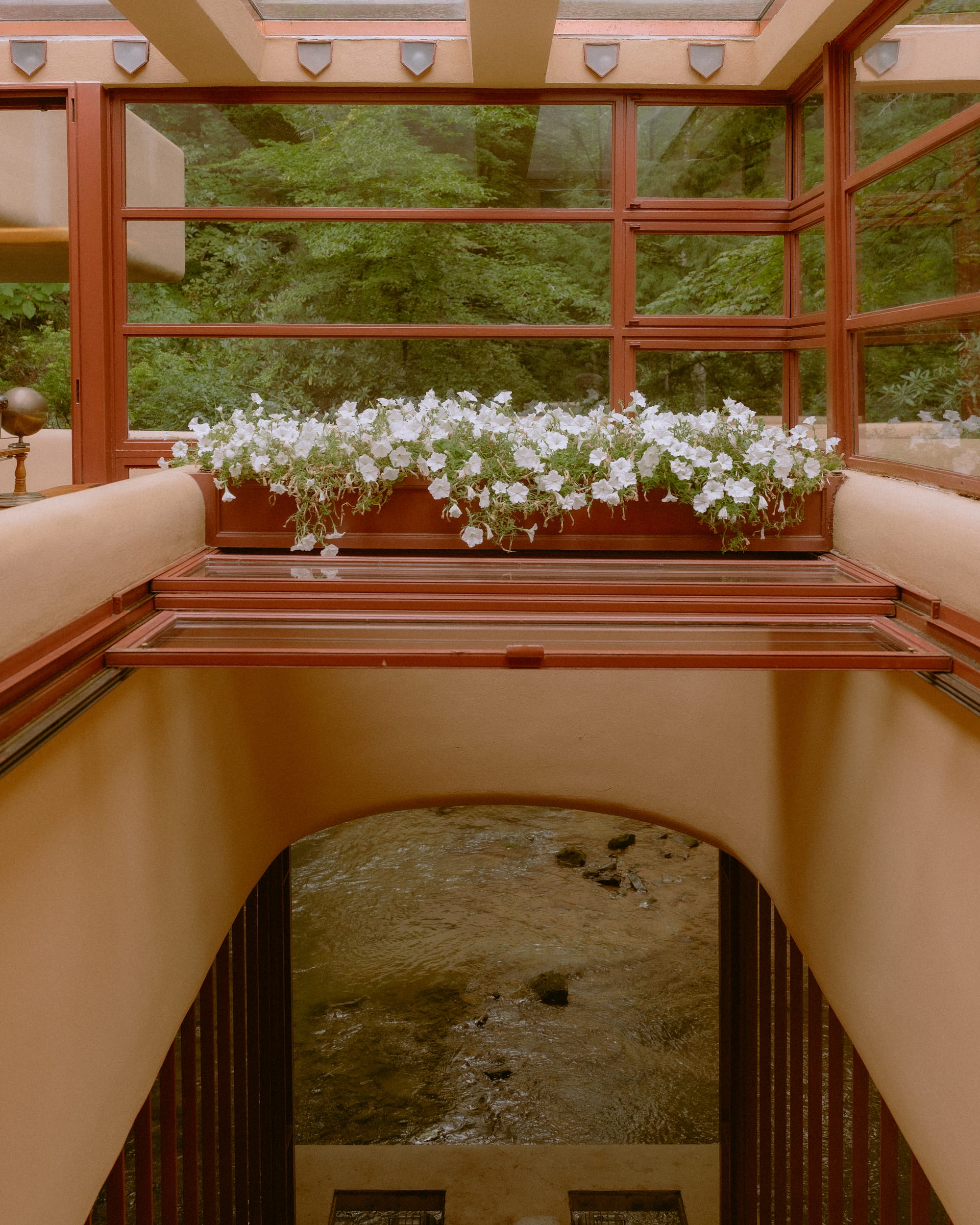
Our favorite detail is a glass hatch in the living room floor. Slide it open and a staircase hangs down to the water, with no landing and no railing at the bottom, just the stream. It does no practical job. It's there to remind you where you are.
The everyday rooms
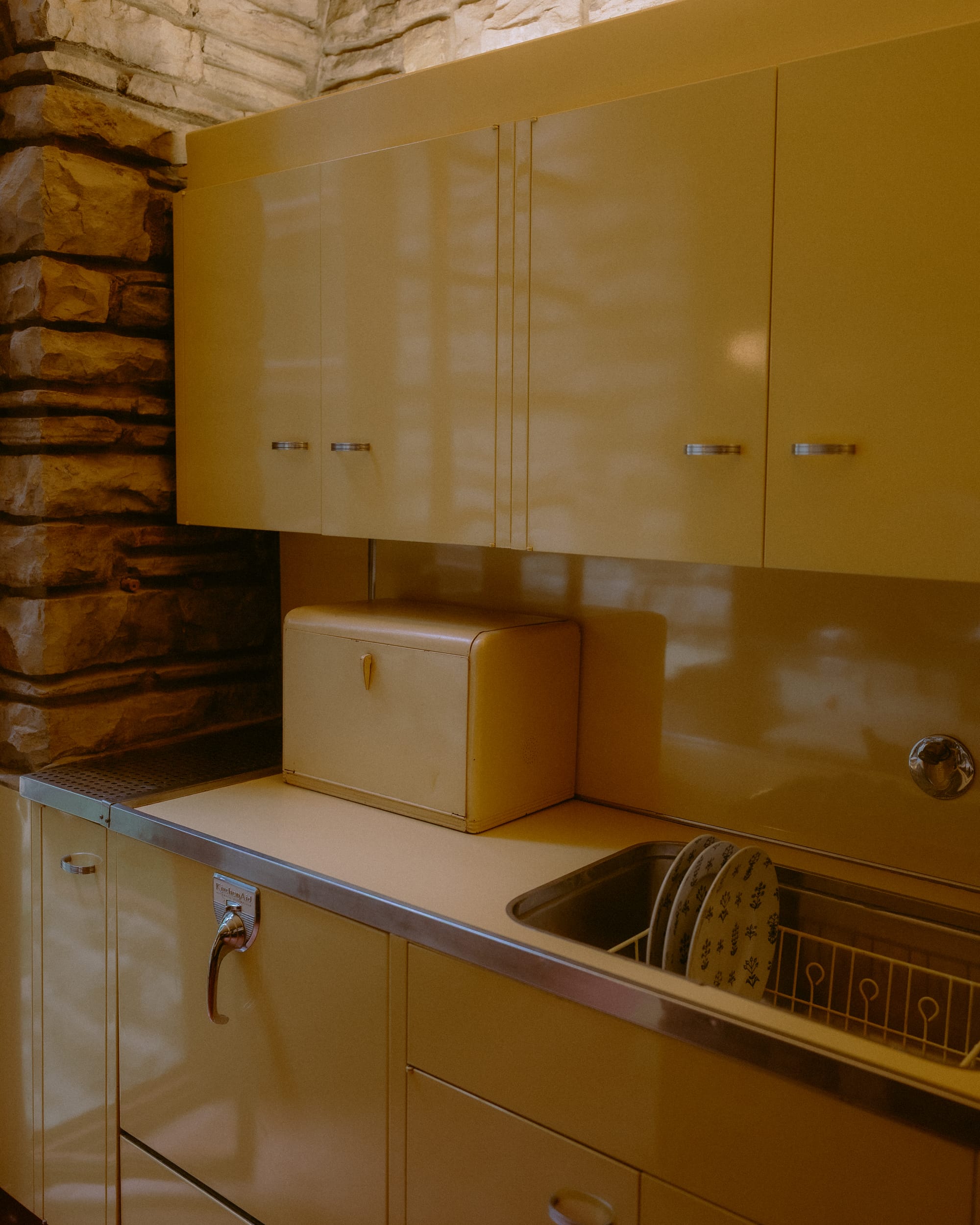
It's easy to focus on the terraces, but the small rooms were just as memorable. The kitchen is a time capsule: glossy enamel cabinets, a cream cast-iron range and a bread box on the counter, all set against the same rough sandstone as the rest of the house. It feels like the Kaufmanns just stepped out.
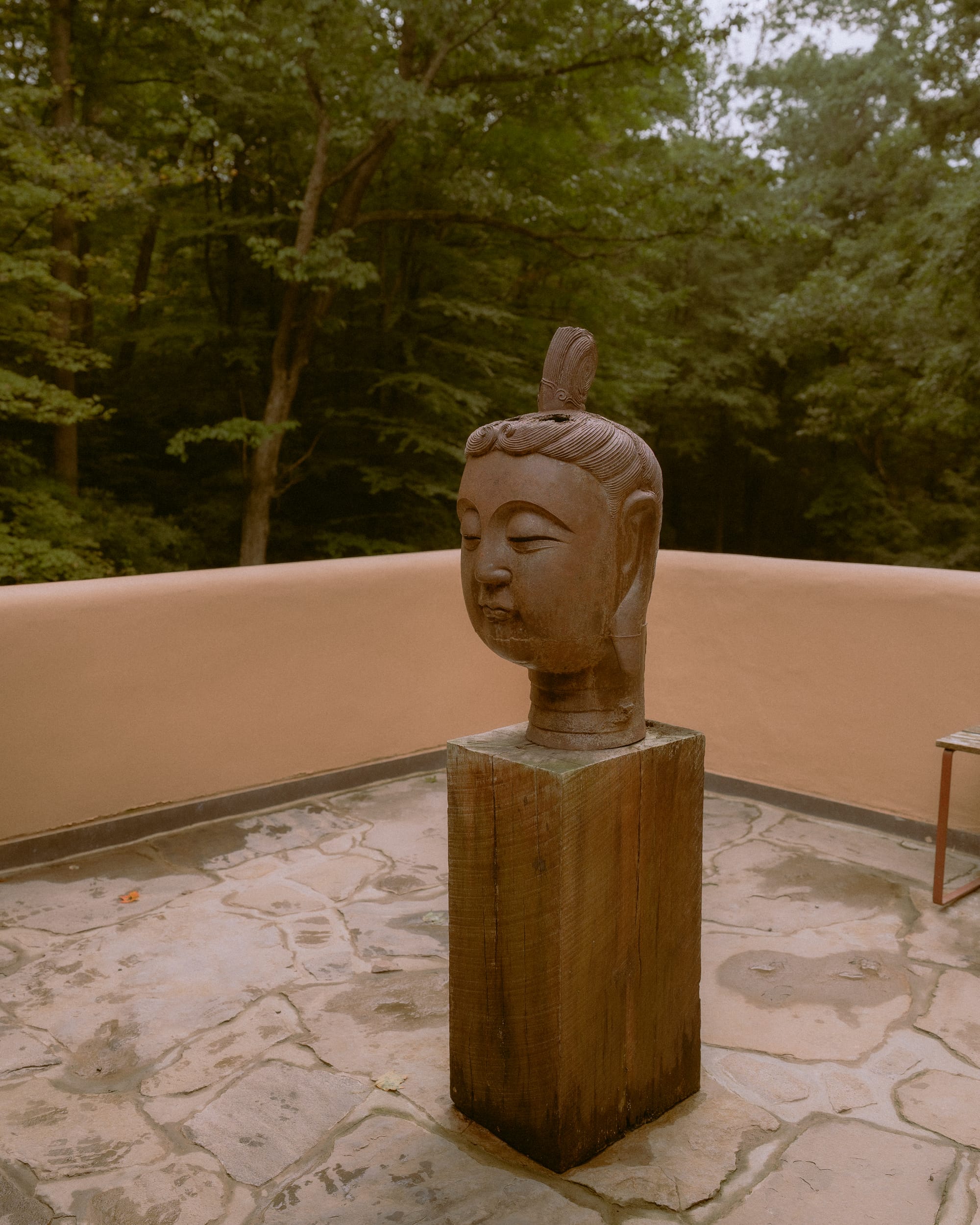
The house still holds the family's furniture, books and art collection. A carved head looks out from one of the upper terraces, one of the Asian sculptures the Kaufmanns placed around the house.
Engineering on the edge
Fallingwater was daring, and it showed. Engineers doubted the cantilevers from the start, and the concrete sagged and cracked for decades. In 2002 the terraces were finally reinforced with steel cables threaded through the structure, which was invisible work that saved the house.
In 1963, Edgar Kaufmann Jr. gave Fallingwater to the Western Pennsylvania Conservancy, and it opened to the public the next year. It's now a National Historic Landmark and, since 2019, part of a UNESCO World Heritage listing of Wright's 20th-century architecture.
If you go
- Getting there: Fallingwater is in Mill Run, Pennsylvania, about 1.5 hours southeast of Pittsburgh by car.
- Book ahead: visits are by timed guided tour, and tickets sell out, especially in summer and during fall foliage. Check fallingwater.org for current tours and hours.
- Don't skip the overlook: the famous view from below the falls is a short walk down from the house. Most of the classic photos are taken there.
- Make a day of it: Wright's Kentuck Knob is about 15 minutes away, and the river and waterfalls at Ohiopyle State Park are close by.
- When to visit: summer is lush and green, as in our photos. October brings the foliage, and the crowds.
Fallingwater is one of those places that lives up to its reputation. Photos show how it looks; standing on the terrace, with the water running beneath you, shows why Wright built it there.


