Gallery
Light, places and people we met along the way.
You hear Fallingwater before you see it. The path winds through rhododendron and hemlock, the sound of Bear Run gets louder, and then the house appears through the trees. Its pale terraces stretch out over the stream as if the rock beneath them had grown into a building.
Frank Lloyd Wright designed it in 1935, near the age of 70, when many people thought his best work was behind him. It became the most celebrated house in America.
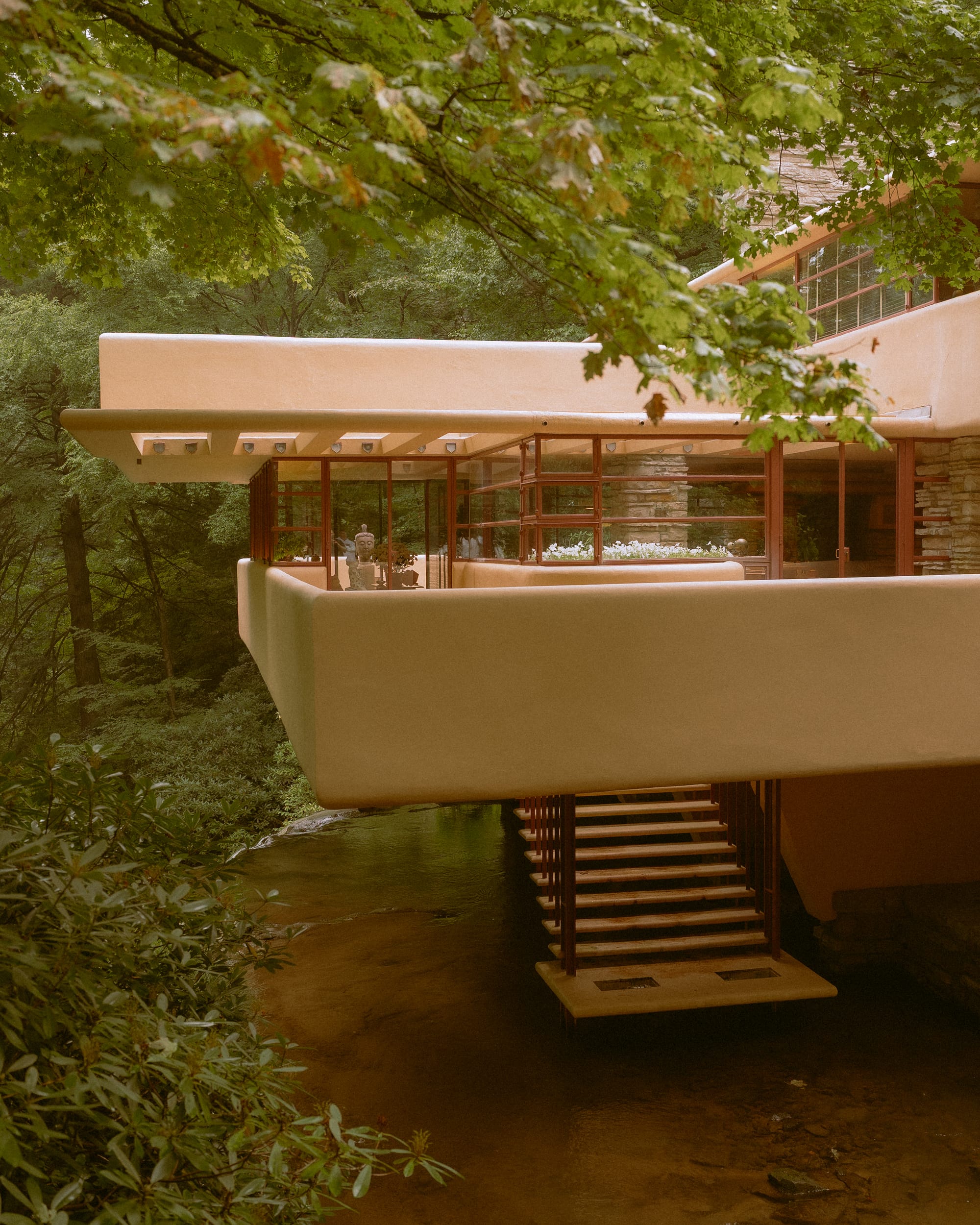
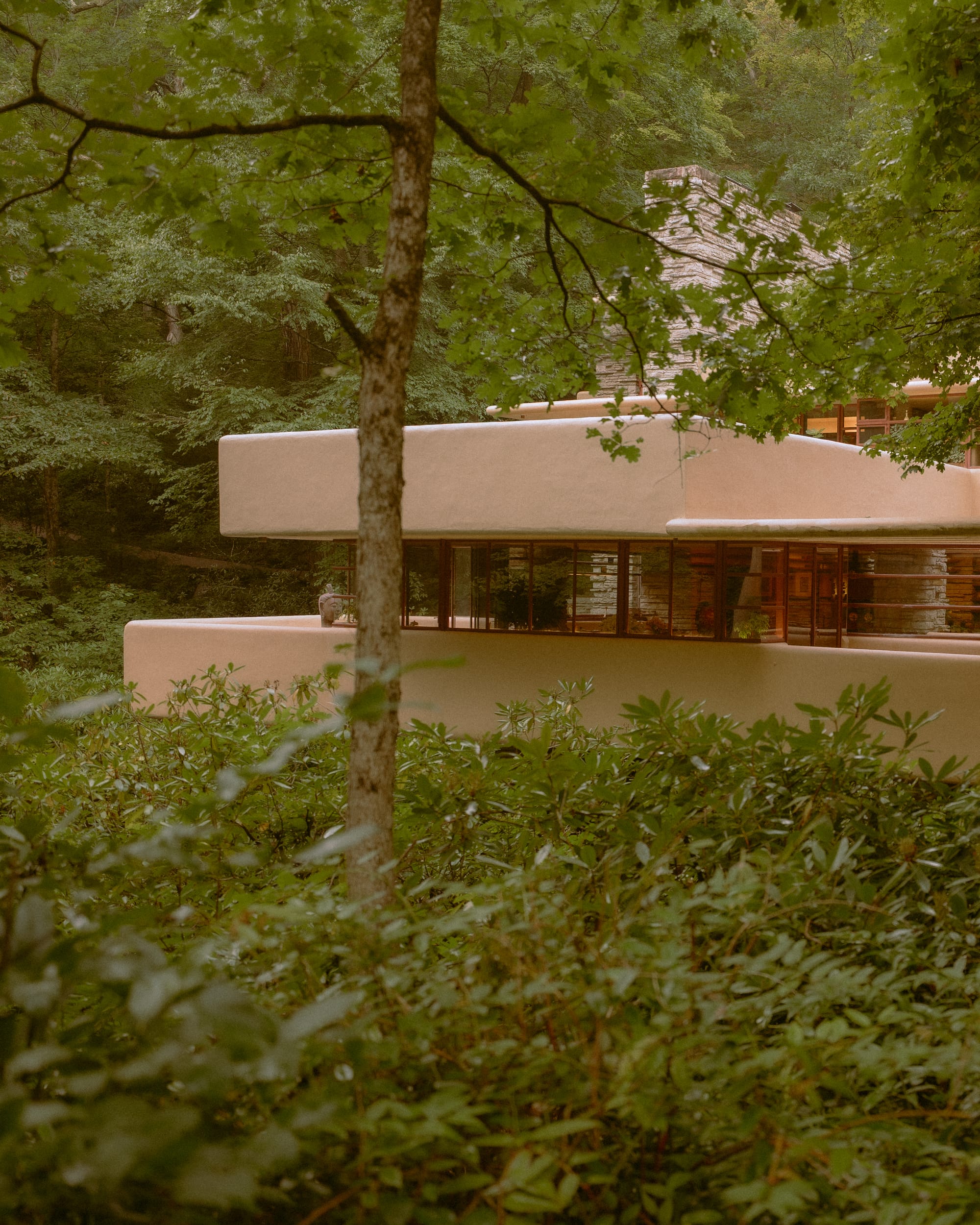
A house on the falls, not facing them
The story starts with a Pittsburgh family. Edgar J. Kaufmann Sr., who owned the city's biggest department store, had run a summer retreat for his employees at Bear Run since the 1910s. When the staff stopped using it, the Kaufmanns bought the land in 1933. Their son Edgar Jr. had just joined Wright's Taliesin Fellowship, and that link brought the architect to the site in late 1934.
The family loved the waterfall and expected a house with a view of it. Wright had other ideas. He put the house on top of the falls, so the family would live with the water instead of looking at it. According to the popular story, he didn't draw a single line for months, then sketched the whole design in a few hours on the morning Kaufmann called to say he was on his way.
Construction ran from 1936 to 1938, and a guest house followed in 1939.

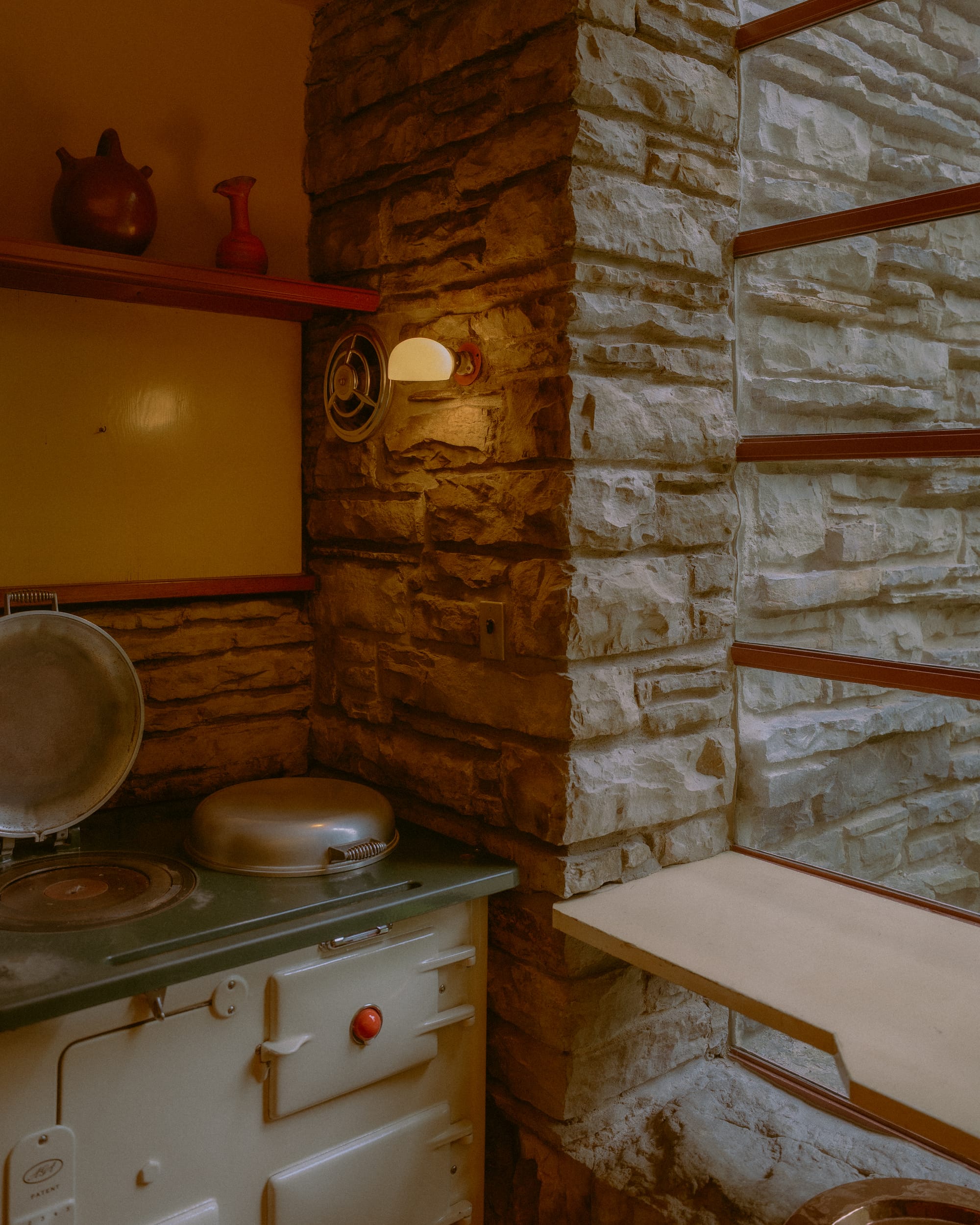
Built from the hillside
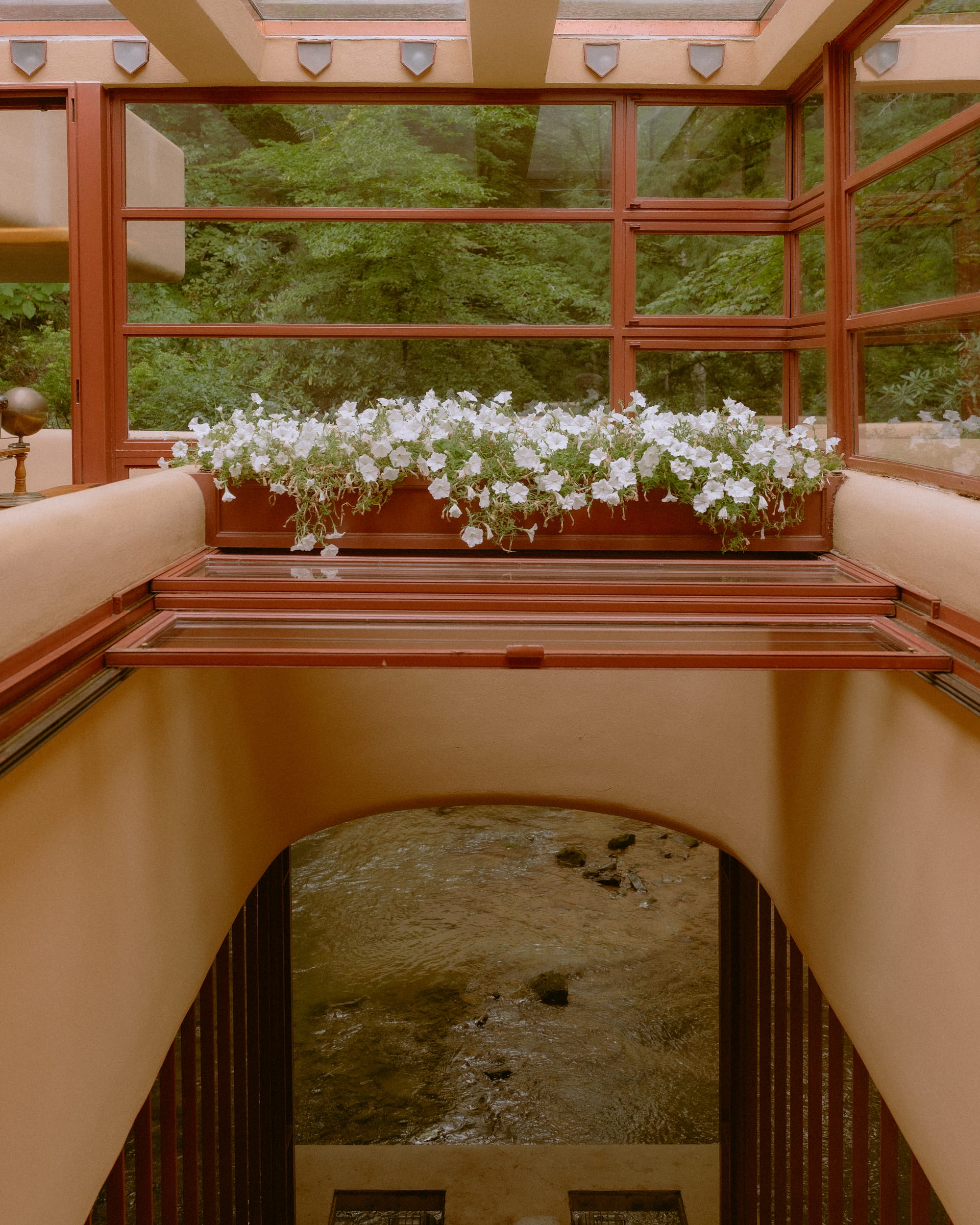
Up close, the house is made of two materials: concrete and stone. The terraces are concrete, painted a soft ochre that Wright chose to match the underside of a rhododendron leaf. The walls are sandstone quarried on the property, laid in rough horizontal bands that echo the ledges of the falls below. The window frames are painted in Wright's favorite Cherokee red.
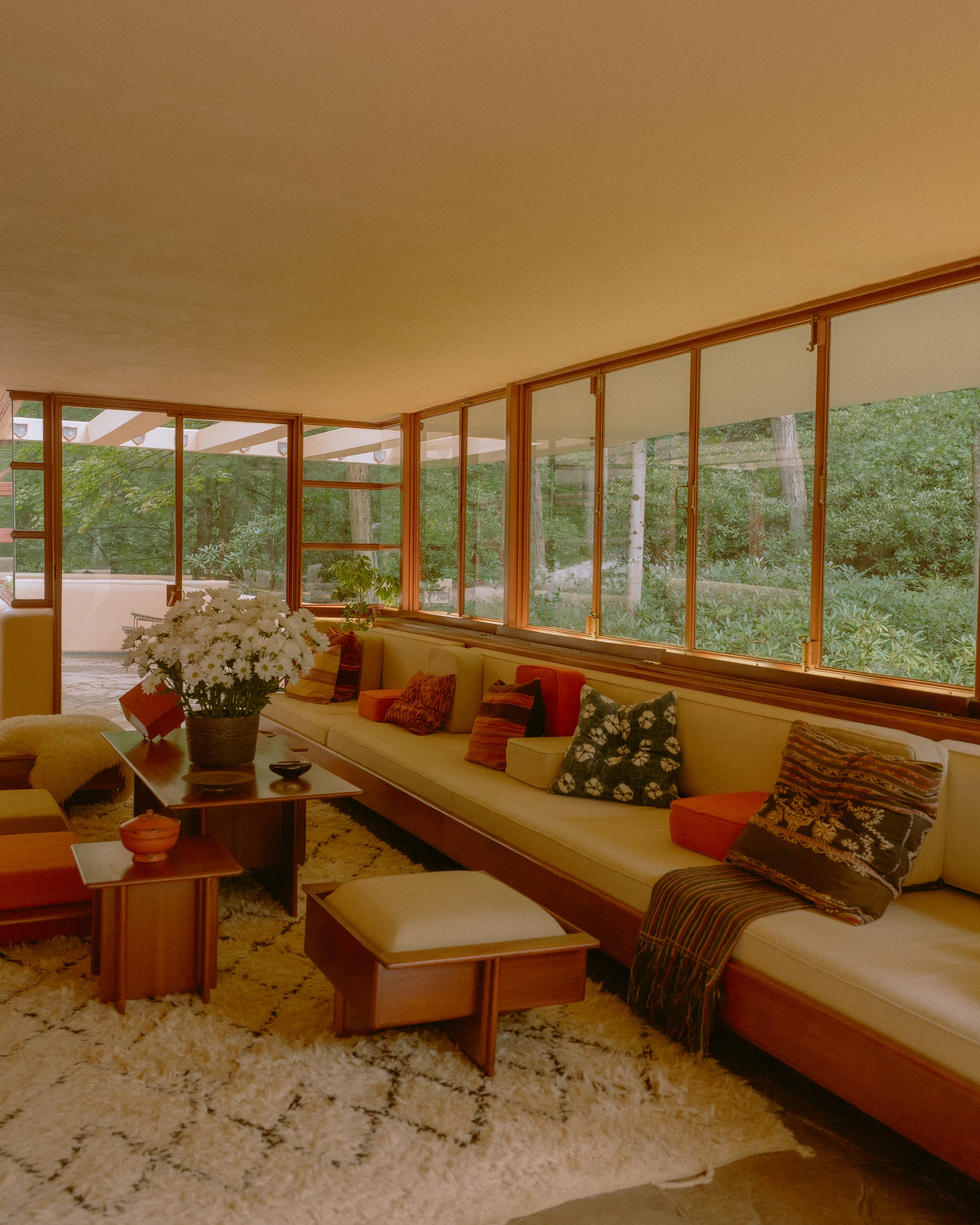
Inside, the boundary between house and forest almost disappears. Walls of glass wrap around the corners with no posts. The stone floors are waxed but left uneven on purpose, so they look like a wet streambed. The fireplace hearth is the boulder the Kaufmanns used to sunbathe on before the house existed. Wright simply built the living room around it.
Our favorite detail is a glass hatch in the living room floor. Slide it open and a staircase hangs down to the water, with no landing and no railing at the bottom, just the stream. It does no practical job. It's there to remind you where you are.
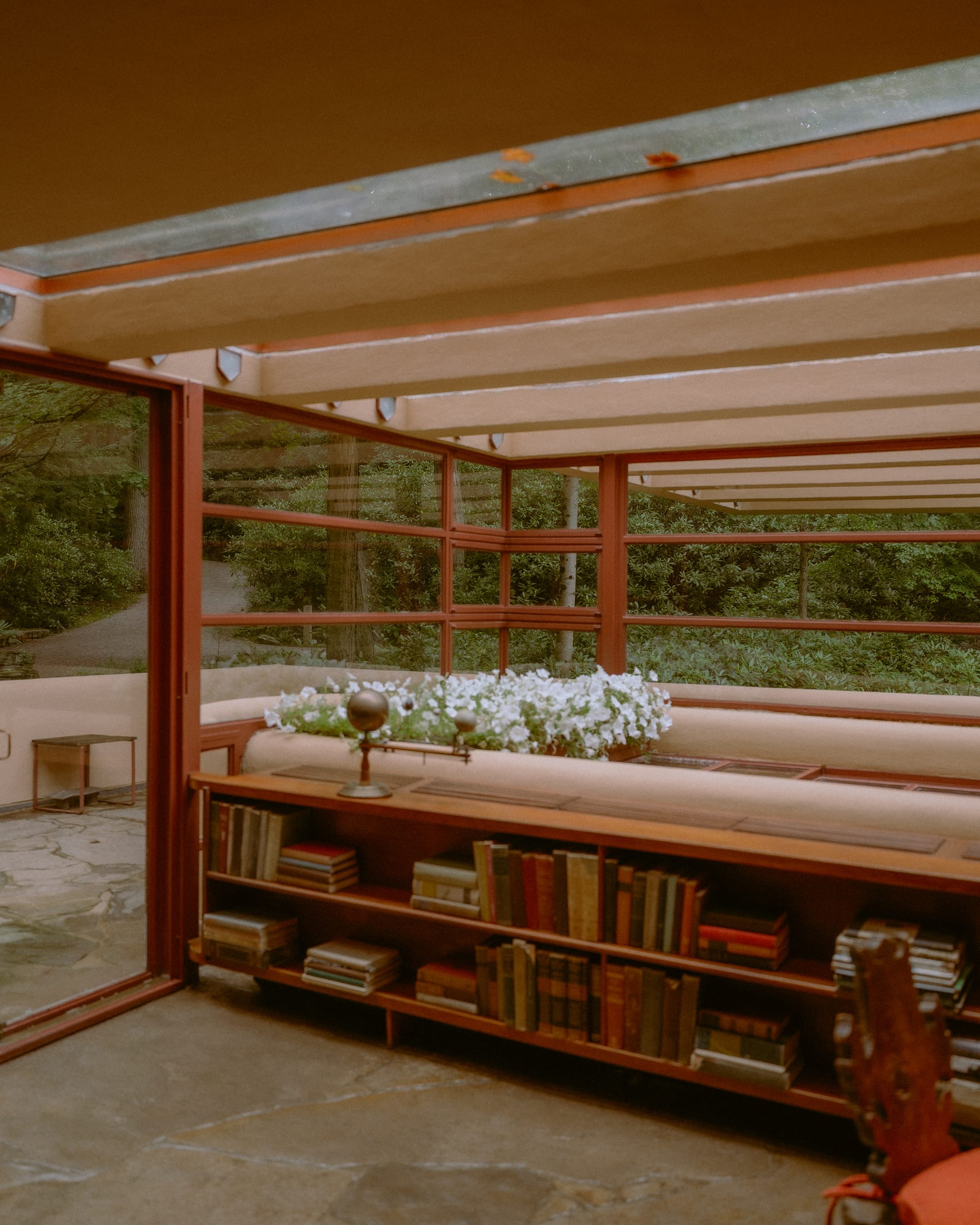
The everyday rooms
It's easy to focus on the terraces, but the small rooms were just as memorable. The kitchen is a time capsule: glossy enamel cabinets, a cream cast-iron range and a bread box on the counter, all set against the same rough sandstone as the rest of the house. It feels like the Kaufmanns just stepped out.
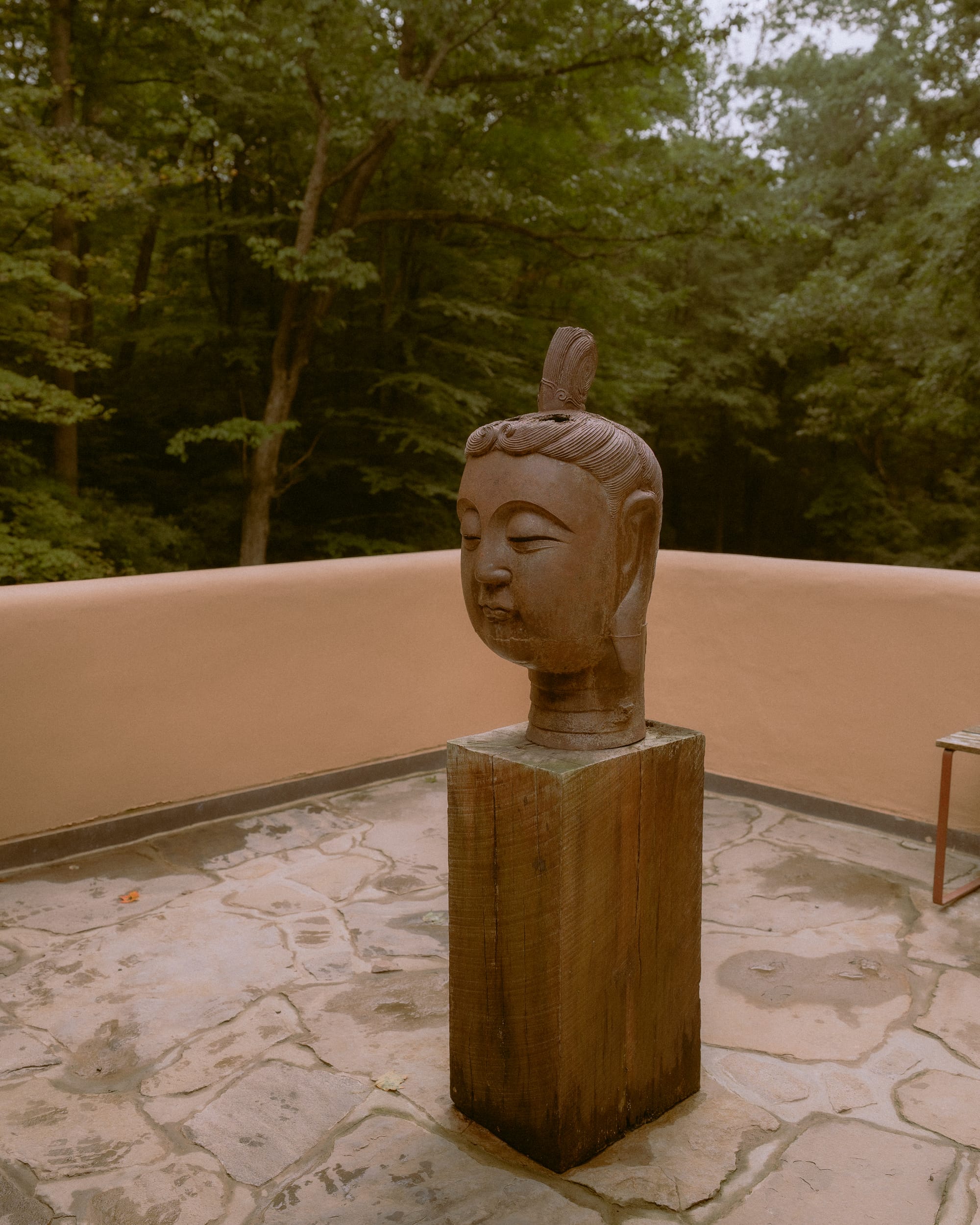
The house still holds the family's furniture, books and art collection. A carved head looks out from one of the upper terraces, one of the Asian sculptures the Kaufmanns placed around the house.
Engineering on the edge
Fallingwater was daring, and it showed. Engineers doubted the cantilevers from the start, and the concrete sagged and cracked for decades. In 2002 the terraces were finally reinforced with steel cables threaded through the structure, which was invisible work that saved the house.
In 1963, Edgar Kaufmann Jr. gave Fallingwater to the Western Pennsylvania Conservancy, and it opened to the public the next year. It's now a National Historic Landmark and, since 2019, part of a UNESCO World Heritage listing of Wright's 20th-century architecture.
If you go
- Getting there: Fallingwater is in Mill Run, Pennsylvania, about 1.5 hours southeast of Pittsburgh by car.
- Book ahead: visits are by timed guided tour, and tickets sell out, especially in summer and during fall foliage. Check fallingwater.org for current tours and hours.
- Don't skip the overlook: the famous view from below the falls is a short walk down from the house. Most of the classic photos are taken there.
- Make a day of it: Wright's Kentuck Knob is about 15 minutes away, and the river and waterfalls at Ohiopyle State Park are close by.
- When to visit: summer is lush and green, as in our photos. October brings the foliage, and the crowds.
Fallingwater is one of those places that lives up to its reputation. Photos show how it looks; standing on the terrace, with the water running beneath you, shows why Wright built it there.
Come along with us on a quick getaway to New York City—a spontaneous trip filled with skyline views, unforgettable meals, and late-night walks through the buzzing streets of Manhattan. Whether you're craving a stylish stay or scouting hidden corners of the city, this mini adventure hits all the right notes.


No NYC trip is complete without a stroll through SoHo. We spent the afternoon weaving through boutiques and art-filled alleys. From classic designer shops to hidden gems, this area is a shopper’s dream.


We wandered through the Lower East Side, taking in the graffiti-covered walls, late-night energy, and glowing streetlights. It’s gritty, colorful, and uniquely NYC.
Sintra is a picturesque town nestled in the foothills of Portugal’s Sintra Mountains, just a short drive from Lisbon. Renowned for its 19th-century Romantic architectural treasures, Sintra is like a page from a fairy tale. The town's landscape is a UNESCO World Heritage site, filled with lush greenery, exotic gardens, and striking palaces.


Azenhas do Mar, on the other hand, is a stunning seaside village within the municipality of Sintra, perched atop cliffs overlooking the Atlantic Ocean. This small but breathtaking locale is characterized by its white-washed houses and narrow streets cascading down towards a beach below, where a natural swimming pool forms amidst the rocks at low tide.


The village’s name, translating to "Watermills of the Sea," hints at its history, with old mills that once utilized the coastal streams. Azenhas do Mar provides a quieter, more introspective experience compared to the opulent palaces of Sintra, ideal for those seeking to connect with Portugal's coastal beauty. Dining here offers scenic views and the opportunity to enjoy fresh seafood, directly influenced by the Atlantic’s bounty.


Whether you’re exploring the historical richness and romantic landscapes of Sintra or soaking in the rugged, natural beauty of Azenhas do Mar, these destinations promise a memorable escape into Portugal’s diverse cultural and natural heritage. Together, they offer a perfect combination of mountainous land, regal history, and dramatic seascapes, making them essential stops on any travel itinerary in Portugal.


Lisbon, Portugal's coastal capital, is a city where old-world charm meets vibrant modern life in a symphony of colorful experiences. Perched on the edge of the Atlantic Ocean, Lisbon is a city built on seven hills, each offering a unique perspective and a new treasure to discover.


A walk through the historic neighborhoods of Alfama or Bairro Alto offers a step back in time with their narrow cobblestone streets and the melancholic sounds of Fado music wafting through the evening air. Lisbon's Tram 28 provides a nostalgic ride through these picturesque quarters, clattering past notable landmarks like the São Jorge Castle that dominates the city skyline with majestic views.


Lisbon's iconic trams, with their distinctive yellow exteriors and vintage charm, are not only a picturesque mode of transport but also a vital part of the city's cultural heritage. The most famous of these, Tram 28, offers a rolling tour through Lisbon's historic neighborhoods, such as Alfama, Baixa, and Graça, clattering past a myriad of notable sites like the Sé Cathedral and São Jorge Castle. These trams, originally introduced in the 19th century, have been meticulously maintained and modernized over the decades, yet they retain their old-world appeal. Riding a Lisbon tram is like stepping back in time, providing both locals and tourists a unique perspective on the city’s steep hills and bustling streets, making every journey a charming and memorable experience.


Lisbon is more than just a city; it's a sprawling canvas of experiences waiting to be discovered. Whether you’re wandering through its historical treasures, enjoying a moment of leisure by the Tagus River, or indulging in its rich gastronomic offerings, Lisbon promises memories that will linger long after your visit.


Porto, Portugal's second-largest city, is a captivating blend of historical richness, artistic expression, and vibrant cultural life. Perched along the Douro River estuary in northern Portugal, this ancient port town is renowned for its stately bridges and the production of port wine, which remains a pulsating part of its cultural and economic fabric.


The city's historical center, Ribeira, is a UNESCO World Heritage site characterized by its narrow, cobbled streets winding past merchants’ houses and cafes, leading down to the bustling riverfront. The iconic Dom Luís I Bridge, a metal arch bridge that spans the Douro River, offers stunning views and connects Porto to Vila Nova de Gaia, where wine cellars store the world-renowned port wine.

Porto's architectural landscape is a treasure trove of historical monuments and innovative modern constructions. The São Bento Railway Station, famous for its tile panels depicting historical scenes from across Portugal, is a breathtaking introduction to the city's artistic heritage. Meanwhile, the Serralves Museum and the Casa da Música showcase the city's flair for contemporary design and culture.


Culturally, Porto is a city of festivals, music, and art. From the animated Festa de São João in June to the various wine festivals, there's a vibrant calendar of events that showcases the city's lively atmosphere and community spirit.


The people of Porto, known as Tripeiros, are as integral to the city’s identity as its buildings. They earn their nickname from the city's signature dish, "tripas à moda do Porto," a hearty stew that speaks to the city's no-frills, robust culinary tradition. Porto's residents are known for their warm hospitality, a laid-back demeanor contrasted with a deep-seated pride in their cultural heritage. They embody a resilience and creativity that is reflected in the city's vibrant cultural festivals, its dynamic arts scene, and the lively atmosphere of its markets and cafes.


Modern architecture in Porto contrasts yet complements its historical roots. The Casa da Música, designed by Rem Koolhaas, is a radical geometric marvel that has become a cultural symbol of the city's contemporary arts scene. Similarly, the Serralves Museum of Contemporary Art, set within the lush grounds of the Serralves estate, blends modernism with the natural landscape, showcasing how Porto seamlessly integrates nature and architecture.


Madeira, often called the "Pearl of the Atlantic," is a captivating archipelago situated in the North Atlantic Ocean, southwest of Portugal. Renowned for its lush landscapes, rugged coastlines, and mild, year-round climate, Madeira is a haven for nature lovers, adventure seekers, and those in pursuit of tranquility.

The heart of Madeira is its stunning natural environment. The island is home to the laurisilva forest, a UNESCO World Heritage site and one of the largest surviving ancient forests in the world, which provides a habitat for a variety of unique flora and fauna. This dense and misty forest is crisscrossed with levadas (irrigation channels) that are now popular walking paths offering scenic views and access to otherwise unreachable parts of the island.


BraveLanders is a tour company known for offering exceptional and adventurous guided tours in the picturesque locales of Madeira and Porto Santo islands. With a focus on providing immersive and exciting experiences, BraveLanders has carved out a niche for itself by combining expert local knowledge with the thrill of off-road adventures.


Pedro, pictured above, is celebrated for his exceptional driving skills and deep understanding of the local environment. He is adept at creating a friendly and engaging atmosphere, making the tours both enjoyable and informative. His ability to share tales of the islands' history and ecology enhances the overall experience, leaving guests enlightened and entertained.


The company's tours are often conducted in robust vehicles like Range Rovers, allowing guests to explore rugged terrains and hidden gems that are not accessible by conventional means. This unique approach not only caters to off-roading enthusiasts but also attracts those looking to experience the islands' natural beauty from a different perspective.


In the world of photography, the Leica brand stands out as a symbol of precision, craftsmanship, and innovation. The Leica SL2, paired with the 28mm APO Summicron lens, embodies these qualities and promises a remarkable photography experience. Recently, I had the pleasure of using this remarkable camera setup during a memorable stay at the Ryder Hotel, where I explored the vibrant streets of a bustling city, capturing street photography and intimate portraits. In this blog, I will share my experience with the Leica SL2 and 28mm APO Summicron lens, as well as the moments I was fortunate enough to document.
A Luxurious Stay at Ryder Hotel
My photographic journey began with a luxurious stay at the Ryder Hotel, located in the heart of the city. The hotel's contemporary design, attention to detail, and impeccable service made it a perfect base for my photography adventure. The spacious and elegantly designed rooms provided a serene escape, allowing me to recharge between my photographic expeditions.


The Ryder Hotel's rooftop bar and lounge offered stunning panoramic views of the city, which I took full advantage of for capturing cityscapes during the golden hour. The hotel's warm and welcoming atmosphere was the ideal setting to prepare for each day's photography excursion.
Exploring the City Through My Lens
With the Leica SL2 in hand, I set out to explore the vibrant streets and neighborhoods of the city. The 28mm APO Summicron lens proved to be the perfect companion for capturing the essence of urban life. Its compact size and fast aperture allowed me to work comfortably in a variety of shooting conditions.

Street Photography
Street photography is a genre that requires quick reflexes and the ability to capture candid moments that unfold in the blink of an eye. The Leica SL2's lightning-fast autofocus and precise controls made it easy to capture these fleeting moments. The 28mm APO Summicron lens delivered stunning sharpness and incredible detail, even in low-light conditions, thanks to its wide f/2 aperture.


As I roamed the bustling streets, I captured the diverse and colorful characters that make up the city's tapestry. The lens's 28mm focal length was perfect for storytelling compositions, and its rendering delivered a cinematic quality to my images. The combination of the Leica SL2 and the 28mm APO Summicron allowed me to create images that felt both intimate and authentic.
Portraits
While the 28mm APO Summicron is not traditionally considered a portrait lens, it proved to be a versatile choice for capturing intimate portraits. Its wide aperture allowed for beautiful background separation, rendering creamy bokeh that made my subjects pop against their surroundings.
I had the opportunity to photograph individuals I encountered during my explorations, and the results were breathtaking. The lens's sharpness and contrast, combined with the Leica SL2's superb color rendering, resulted in portraits that were both natural and full of character. The 28mm focal length encouraged me to get up close and personal, creating a sense of connection between the subject and the viewer.

Final Thoughts
My experience with the Leica SL2 and 28mm APO Summicron lens during my stay at the Ryder Hotel was nothing short of extraordinary. The camera and lens combination's exceptional build quality, ease of use, and image quality exceeded my expectations. Whether I was capturing the energy of the city streets or the depth of individual personalities, this gear allowed me to tell compelling visual stories with every click of the shutter.
The Leica SL2 and 28mm APO Summicron lens are the perfect tools for any photographer seeking to blend street photography and portrait work. They embody the Leica tradition of excellence, providing photographers with the means to capture life's moments with precision and artistry. My journey with these exceptional pieces of equipment at the Ryder Hotel was an unforgettable experience, and I look forward to creating more photographic memories with them in the future.
The Grand Canyon is one of the most iconic natural wonders in the United States, drawing millions of visitors from all over the world each year. This vast and breathtaking chasm in the Earth's crust is a testament to the power of natural erosion and the beauty of the American Southwest. But a trip to the Grand Canyon isn't just about the canyon itself; there are several other nearby attractions that offer unique and awe-inspiring experiences. In this blog, we'll take you on a journey through the Grand Canyon, Antelope Canyon, Seven Magic Mountains, and the scenic drive from Las Vegas.
The Grand Canyon: Nature's Masterpiece
The Grand Canyon is located in northern Arizona and is known for its immense size and intricate landscape. Carved over millions of years by the Colorado River, the canyon is over a mile deep, up to 18 miles wide, and stretches for 277 miles. The stunning vistas and vibrant hues of red and orange in the rocks make it a must-visit destination for nature enthusiasts and adventure seekers.

Visiting the Grand Canyon offers various activities, such as hiking, camping, and rafting. The South Rim is the most visited and accessible part of the canyon, with numerous viewpoints, visitor centers, and facilities. The North Rim is less crowded and offers a more remote experience. You can explore the Grand Canyon on foot, by mule, or from above through helicopter tours.
Antelope Canyon: A Subterranean Wonderland
While the Grand Canyon offers breathtaking views from above, Antelope Canyon, located in Navajo Nation near Page, Arizona, provides a unique underground experience. This slot canyon is renowned for its stunning, undulating sandstone walls, formed by centuries of water and wind erosion. There are two separate sections: Upper Antelope Canyon and Lower Antelope Canyon, each with its own distinct character.


Upper Antelope Canyon is famous for its beams of sunlight that penetrate the narrow openings in the canyon, creating a mesmerizing play of light and shadow on the smooth, curving walls. Lower Antelope Canyon features winding passageways and ladders, offering a more intimate exploration of this natural wonder.
Tours are available for both sections, but it's essential to book in advance, as they can be quite popular, and the number of visitors is regulated to protect the delicate environment.
Seven Magic Mountains: A Burst of Color in the Desert
Not far from Las Vegas, but in a stark contrast to the desert landscape, you'll find the Seven Magic Mountains. This colorful art installation is a striking contrast to the natural wonders of the region, yet it's equally captivating. Comprising seven towering stacks of brightly painted boulders, this contemporary art project by Swiss artist Ugo Rondinone provides a whimsical and otherworldly experience in the desert.


The Seven Magic Mountains, located just off Interstate 15 near Jean, Nevada, are easily accessible by car. It's a fantastic spot for photography, and the vibrant colors make it pop against the desert backdrop. The exhibit was originally intended to be temporary, but due to its popularity, it has been extended several times, making it a must-see attraction for anyone in the area.

The Scenic Drive from Las Vegas
If you're starting your journey from Las Vegas, the drive to these remarkable destinations is an adventure in itself. From the glitz and glamour of the Las Vegas Strip, you'll venture out into the vast and varied landscapes of the American Southwest. The drive to the Grand Canyon, Antelope Canyon, and Seven Magic Mountains is approximately as follows:
From Las Vegas to the Grand Canyon
The most popular route to the Grand Canyon is through the South Rim, about a 4-5 hour drive from Las Vegas. The journey takes you through the picturesque Mojave Desert, with opportunities to explore Hoover Dam, Lake Mead, and Route 66 along the way.
From the Grand Canyon to Antelope Canyon
From the Grand Canyon's South Rim, you can drive to Antelope Canyon near Page, Arizona, which is about a 2-3 hour drive. Along this route, you can experience the beauty of the Arizona desert, see the Vermilion Cliffs, and visit the stunning Horseshoe Bend.
From Antelope Canyon to Seven Magic Mountains
After your Antelope Canyon visit, it's a relatively short 2-3 hour drive back towards Las Vegas to see the Seven Magic Mountains. You can easily fit all three destinations into a memorable road trip.
Tobago, the smaller half of the twin-island nation of Trinidad and Tobago, is a hidden gem in the Caribbean. While it may not be as well-known as some of its Caribbean neighbors, it boasts the kind of natural beauty and local charm that travelers often seek. In the picturesque fishing village of Castara, Tobago, you'll find a haven where boat rides, pristine waters, and breathtaking sunsets blend seamlessly with the warmth of the local community.

A Slice of Paradise by the Sea
The moment you step foot in Castara, you'll be greeted by the sweet scent of the sea and the gentle hum of the village. This remote destination on the Caribbean's northeastern coast is a tropical paradise, featuring palm-fringed beaches, lush rainforests, and pristine waters. It's the perfect place to escape the hustle and bustle of modern life.
Boat Rides to Remember
Castara is not just a beachside paradise; it's also a gateway to thrilling boat rides and underwater adventures. The village is a hub for boat tours and snorkeling excursions, taking you to the heart of the Caribbean's marine wonderland. Explore coral reefs teeming with colorful fish, or swim alongside majestic sea turtles in their natural habitat.

One of the most sought-after experiences in Castara is a visit to Englishman's Bay. This secluded beach can be accessed via a boat ride from the village, and the journey alone is a breathtaking adventure. As you cruise along the coast, the emerald hills, swaying palms, and crystal-clear waters will mesmerize you, making the boat ride as enjoyable as the destination itself.
Sunsets That Take Your Breath Away
As the sun begins its descent in Castara, you'll witness a spectacle that's nothing short of magical. The sunsets here are renowned for their unparalleled beauty. The sky transforms into a canvas of vibrant oranges, pinks, and purples, casting a warm glow over the ocean. It's a serene and romantic setting, making it the ideal backdrop for a quiet moment with a loved one or a reflective pause alone on the beach.

Locals and visitors often gather on the beaches in the early evening, sharing stories, enjoying live music, or simply basking in the golden light. The slow, unhurried pace of life in Castara is the perfect antidote to a world often characterized by rush and routine.
The Heartwarming Hospitality of Friendly Locals
What truly makes Castara, Tobago, special is its people. The friendly locals are known for their warm smiles and open hearts. They are more than happy to share their island with you, offering a glimpse into their way of life. You can join in on fishing excursions with them, learn about their traditional crafts, or simply chat over a delicious plate of local cuisine at one of the village's restaurants.


The sense of community in Castara is palpable, and it's not uncommon for visitors to leave feeling like they've made lifelong friends. It's a place where you can immerse yourself in the local culture and enjoy a vacation that goes beyond relaxation and adventure—it's a true cultural exchange.
In Castara, Tobago, you'll discover a piece of paradise that combines the allure of pristine waters, unforgettable boat rides, breathtaking sunsets, and the warmth of its friendly locals. It's a destination that redefines the typical beach holiday, offering a profound connection with nature and a close-knit community that welcomes you with open arms. So, if you're seeking a truly authentic Caribbean experience, make your way to Castara, where beauty and friendship intertwine to create an unforgettable tropical getaway.

Nestled within the Caribbean Sea lies a tranquil paradise that enchants travelers with its pristine beaches, lush rainforests, and vibrant local culture. Welcome to Castara in Tobago, a quaint fishing village that offers a unique and authentic Caribbean experience. Join us as we delve into the mesmerizing beauty and charm of this hidden gem.
Are you ready for an unforgettable journey through the heart of Northern California? Whether you're a food and wine enthusiast, a nature lover, or a history buff, San Francisco and Napa Valley have something to offer for everyone. Join us as we explore the unique charm of these two iconic destinations.

San Francisco - The City by the Bay
San Francisco, often referred to as the "City by the Bay," is known for its diverse culture, iconic landmarks, and stunning bay views. Here are some highlights of this bustling metropolis

Golden Gate Bridge
One of the world's most recognizable landmarks, this iconic bridge is a must-see. Take a leisurely walk or bike ride across its towering spans and revel in the breathtaking views.

Alcatraz Island
Delve into the history of this notorious former prison that once held some of America's most infamous criminals. The Alcatraz tour offers a fascinating glimpse into the past.
Fisherman's Wharf
Enjoy the lively atmosphere of this waterfront neighborhood, known for its seafood restaurants, street performances, and the famous sea lions at Pier 39.


Cable Cars
San Francisco's historic cable cars are not just a mode of transportation; they're a symbol of the city. Take a ride and explore the hilly streets of the city in a unique way.

Foodie Paradise
San Francisco is a food lover's dream. Sample local cuisine at the Ferry Building Marketplace or savor the city's world-class dining options.


Napa Valley - A Wine Lover's Paradise
From San Francisco, embark on a scenic drive to Napa Valley, California's premier wine region. Here are some reasons why Napa Valley is a paradise for wine enthusiasts


Wineries Galore
Napa Valley boasts over 400 wineries, each offering a unique tasting experience. Visit renowned wineries like Robert Mondavi, Beringer, and Opus One, or discover hidden gems with boutique, family-owned vineyards.
Vineyard Tours
Take a guided tour through lush vineyards, where you can learn about the winemaking process and the history of the region. Some tours even offer the opportunity to taste grapes right from the vine.
Tasting Rooms
Explore charming tasting rooms in towns like Napa, Yountville, and St. Helena. Many wineries offer tastings, and you can discover a variety of wines, from Cabernet Sauvignon to Chardonnay.
Gourmet Dining
Napa Valley is not just about wine; it's a culinary delight too. Savor farm-to-table cuisine at Michelin-starred restaurants or enjoy a relaxed picnic amidst the vineyards.
Scenic Beauty
Beyond wine, Napa Valley offers breathtaking natural beauty. The rolling hills, vine-covered landscapes, and hot air balloon rides make for an unforgettable experience.
In summary, a visit to San Francisco and Napa Valley is a perfect pairing of city and countryside. While San Francisco provides a dynamic urban experience with its iconic attractions and cultural diversity, Napa Valley offers a tranquil escape to a world of vineyards and fine wine. Whether you're a wine connoisseur, a history buff, or simply in search of natural beauty, these two destinations will not disappoint. So, get ready to indulge in the best of Northern California's offerings – from the city's vibrant energy to the serenity of wine country, it's a journey you won't soon forget. Cheers to an unforgettable adventure!
Cape Town, South Africa, is a city that captivates the soul with its stunning natural beauty, vibrant culture, and diverse attractions. From the iconic Table Mountain to the historical Robben Island, there's a wealth of experiences to be had in this magnificent city. In this blog, we'll take you on a journey through some of the must-visit places in Cape Town, including Once in Cape Town, Kirstenbosch Gardens, and the idyllic Camps Bay.

Once in Cape Town: Where Adventure Begins
"Once in Cape Town" is not just a name; it's an invitation to experience the extraordinary. This unique hostel, located in the heart of Cape Town's vibrant Long Street, offers much more than a comfortable stay. It's a hub of adventure, creativity, and community.

At Once in Cape Town, you'll find yourself surrounded by fellow travelers, both local and international, making it the perfect place to make new friends and share experiences. The hostel offers an array of activities, from surfing lessons on the city's renowned beaches to guided tours of Cape Town's hidden gems.
If you're an adventure enthusiast, you can embark on thrilling activities like shark cage diving, paragliding off Signal Hill, or even hiking up Table Mountain. Once in Cape Town is more than just a place to rest your head; it's a place to start your Cape Town adventure.
Kirstenbosch Gardens: Where Nature Unveils Its Majesty
Cape Town is blessed with an abundance of natural beauty, and Kirstenbosch National Botanical Garden is a jewel among them. Located at the eastern foot of Table Mountain, Kirstenbosch is often considered one of the most beautiful gardens in the world.

The garden boasts an incredible diversity of South African flora, featuring a variety of fynbos (the indigenous vegetation of the Western Cape) and stunning collections of cycads, proteas, and other native plants. A leisurely stroll through the garden's pathways will introduce you to the rich biodiversity of the region.
One of the highlights of Kirstenbosch is the Tree Canopy Walkway, known as the "Boomslang." This elevated walkway takes you through the treetops, offering breathtaking views of the gardens and surrounding mountains. It's an Instagram-worthy experience that provides a unique perspective on nature.
Camps Bay: Where Sun, Sea, and Elegance Meet
Nestled between the rugged Twelve Apostles mountain range and the sparkling Atlantic Ocean, Camps Bay is Cape Town's most glamorous beachfront neighborhood. It's a place where relaxation and sophistication coexist harmoniously.

Camps Bay Beach is a postcard-perfect destination with its golden sands and turquoise waters, attracting sun-seekers, swimmers, and surfers alike. The palm-lined promenade along the beach is adorned with trendy cafes, restaurants, and bars, making it a popular spot for both locals and tourists to unwind and enjoy a seaside meal.

As the sun dips below the horizon, Camps Bay transforms into a romantic haven. The sunset views from the beach are nothing short of mesmerizing, and there's no shortage of upscale restaurants where you can savor delicious cuisine while taking in the scenery.

Cape Town offers a unique blend of natural wonders, cultural diversity, and unparalleled experiences. Whether you're exploring the vibrant atmosphere of Once in Cape Town, immersing yourself in the natural beauty of Kirstenbosch Gardens, or basking in the elegance of Camps Bay, this South African gem promises an unforgettable journey. So, pack your bags and prepare to be enchanted by the once-in-a-lifetime adventures Cape Town has to offer.
Cancún, located on Mexico's Yucatán Peninsula, is a dream destination for beach enthusiasts and nature lovers alike. With its world-famous beaches, crystal-clear waters, and captivating cenotes, this tropical paradise promises a vacation experience like no other. In this blog post, we will delve into the magic of Cancún, from its stunning beaches to its hidden cenotes and everything in between.

The Beaches of Cancún: A Slice of Heaven
Cancún's claim to fame undoubtedly lies in its breathtaking beaches. Imagine powdery, white sands stretching as far as the eye can see, kissed by the turquoise waters of the Caribbean Sea. These pristine shores provide the ideal setting for relaxation, sunbathing, and a multitude of water sports. The main beach area in the Hotel Zone is particularly popular, offering easy access to resorts, restaurants, and a vibrant beachfront scene. Here, you can unwind under the swaying palms, take long walks along the shoreline, or simply soak in the sheer beauty of nature.

Crystal Clear Waters: A Diver's Paradise
The Caribbean Sea surrounding Cancún is a diver's dream come true. What sets this destination apart is its crystal-clear waters. The combination of a barrier reef and calm tides ensures that the sea is incredibly transparent, making it the perfect playground for swimming, snorkeling, and scuba diving. Beneath the surface, a vibrant marine ecosystem comes to life, with colorful coral reefs and exotic sea creatures awaiting exploration. Whether you're a seasoned diver or a first-timer, Cancún's underwater wonders are a must-see.


Cenotes: The Hidden Treasures of Cancún
Cancún's natural wonders extend beyond its beaches to the mystical cenotes. Cenotes are sinkholes formed by the collapse of cave systems, and the Yucatán Peninsula is famous for them. These hidden gems are often filled with freshwater, creating a unique and refreshing opportunity for a swim or dive in a natural, underground pool. Some cenotes are open-air, nestled in lush green surroundings, while others are enclosed within cave-like structures, but all offer an enchanting experience that contrasts with the open sea. Discovering these cenotes is like stepping into another world, a world that's both surreal and enchanting.


Public Beaches: For Everyone to Enjoy
While the convenience of beachfront resorts is tempting, Cancún also offers several public beaches accessible to all. Playa Delfines and Playa Tortugas are two popular public beaches that capture the spirit of Cancún. Here, you can soak up the sun, swim in the refreshing waters, and even try your hand at various water sports. Facilities like restrooms, food vendors, and rental stands for equipment are readily available, making these public beaches a fantastic option for those seeking a more budget-friendly and communal beach experience.

Conclusion: A Slice of Paradise
In Cancún, you'll find a harmonious blend of natural beauty and modern amenities. Whether you seek relaxation, adventure, or a combination of both, Cancún delivers. It's a destination that continues to captivate travelers with its breathtaking beaches and captivating aquatic treasures. So, whether you're lounging on the sandy shores, exploring the wonders of the underwater world, or discovering the hidden cenotes, Cancún promises an unforgettable experience in the heart of paradise. Don't miss the opportunity to explore this Mexican gem that has it all - Cancún, where nature's beauty meets modern comfort.
Chicago, the Windy City, is a vibrant metropolis with a rich cultural heritage and a stunning skyline that graces the shores of Lake Michigan. One of its most famous landmarks, often referred to as "the Bean," draws tourists from around the world. In this blog, we'll explore Chicago's downtown area, the beauty of Lake Michigan, and the intriguing story behind this iconic sculpture known as "the Bean."
Chicago's Downtown Skyline
Chicago's downtown is a bustling hub of activity, home to impressive skyscrapers, cultural institutions, and a dynamic atmosphere. The city's skyline is an architectural wonder, punctuated by landmarks like the Willis Tower (formerly known as the Sears Tower) and the John Hancock Center, which provide breathtaking views from their observation decks.

The downtown area is also renowned for its cultural attractions, including the Art Institute of Chicago, the Chicago Symphony Orchestra, and the Field Museum. The Art Institute is home to an extensive collection of art from around the world, with notable pieces from artists like Grant Wood, Georges Seurat, and Vincent van Gogh. Additionally, Millennium Park is a must-visit in downtown Chicago, as it houses the famous Cloud Gate sculpture, affectionately called "the Bean."
Lake Michigan's Beauty
Lake Michigan, one of the five Great Lakes of North America, graces Chicago's eastern edge, providing both stunning natural beauty and recreational opportunities. Its vast expanse creates a sense of tranquility in the midst of a bustling city. Lake Michigan's shoreline is adorned with beaches, parks, and walking trails, offering residents and visitors an escape from the urban grind.

North Avenue Beach and Oak Street Beach are popular choices for sunbathing and swimming during the summer months. Further north, Montrose Beach boasts a bird sanctuary, while Promontory Point provides an excellent spot for picnicking and taking in the stunning views of the lake and the city's skyline.


"The Bean" - An Iconic Sculpture
Nestled within the heart of Millennium Park, "the Bean" is one of Chicago's most beloved and recognizable landmarks. Officially known as "Cloud Gate," this sculpture was created by British artist Anish Kapoor and was unveiled in 2006.


The sculpture is a giant, mirrored bean-shaped structure, measuring 33 feet by 66 feet, with a 12-foot-high arch beneath it. Its polished stainless steel surface reflects the city's skyline and the surrounding park, creating a surreal and captivating visual effect. It has become a symbol of Chicago, attracting visitors who come to see their reflections and the city's panorama on its shiny surface.
Cloud Gate's unique design has made it a hit on social media, and it has even been featured in numerous movies and television shows. Its design and reflective properties make it a versatile backdrop for art, photography, and selfies. No visit to Chicago is complete without a stop at "the Bean" for a fun and interactive experience.
Exploring downtown Chicago, the picturesque Lake Michigan, and the iconic "Bean" in Millennium Park is an unforgettable experience. Chicago's vibrant culture, impressive skyline, and natural beauty blend seamlessly with this unique work of art. Whether you're an art enthusiast, a nature lover, or simply a curious traveler, a visit to the Windy City offers a diverse range of attractions that will leave you with cherished memories and a newfound appreciation for the beauty of urban life.
Every photograph has a story behind it.
Read the stories